



Providing Answers, Support and Hope in Georgia
Thirty-One Faces of Hope: Chris Reed
The lupus community includes people living with lupus, friends, family and supporters across Georgia. For Lupus Awareness Month, we would like to highlight some of our lupus heroes and champions.
Chris Reed, LFAGA Advocacy Co-Chair
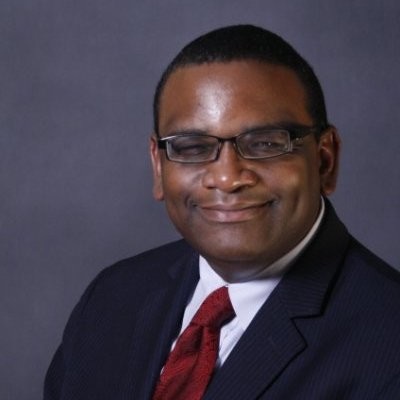
I am a native of Atlanta, Georgia. In 1990 and at the age of 16, I was diagnosed with Systemic Lupus Erythematosus. I’ve probably lived with lupus since grade school. Before I was diagnosed, I remember sitting in driver’s ed class, barely able wrap my hands around the steering wheel and suffering from a constant cough. Walking up the stairwell to my bedroom each day felt like someone was standing on my chest.
My diagnosis was traumatic! My internist admitted me into the hospital because he saw a spot on my lung. Within days, I was in intensive care because now doctors found that my immune system had attacked my lungs, heart, gastrointestinal system, central nervous system, and blood. My blood pressure was extremely high, and I had a grand mal seizure. The doctors who treated me in the hospital and in intensive care, ran many tests, some of them embarrassing. After I was cleared from intensive care and returned to a normal unit, the infectious disease doctor who was the primary doctor in charge of my care diagnosed me with lupus. I began steroid treatments immediately.
My body responded to the steroids very quickly. Steroids, especially Prednisone, are immensely powerful. So powerful, that my chronic headaches, that I had lived with since the age of 8 diminished. With steroids comes fluid retention and therefore weight gain. With weight gain came stretch marks which sometimes became infected, acne, hair loss, and mood swings. By the age of 26, I developed acid reflex and osteoporosis because of long term steroid treatment.
It took me eight years to graduate from college because lupus got in the way. My immune system, which is central to a lupus flare, kept attacking my heart. Doctor’s are amazed today that my heart is in good condition considering the amount of time I have lived with pericarditis. Pleurisy is another frequent problem of mine. The inflammation in my lungs, due to frequent bouts of pleurisy, have caused some scarring. Despite this struggle I graduated from college with honors and was admitted to Tulane University Law School.
I battled the three years of law school in remission. I still think that this was a miracle. Months after graduating from law school my legs started to swell. The internist who conducted my mandatory county physical told me that I should get to my kidney doctor quickly. My parents and I frantically tried to figure out next steps. My county medical insurance would not start for another month and my kidney doctor needed to conduct a kidney biopsy. Since my last rheumatologist was in New Orleans, we found a new rheumatologist. I immediately started prednisone and set up an appointment with the best nephrologist in the world.
My nephrologist and I discussed possible treatments. Given that I had just started my career and the potential side effects weighed with the length of treatment, I began Cytoxan, a form of chemotherapy, treatments. My experience with my first dose of Cytoxan was tough. My headaches returned and I began developing chest pain. These headaches were different than the headaches that I had as a child. These were sharper, caused vomiting, and occurred every day. Some of the headaches were so bad that I could not drive myself home from work. I frequented the emergency room, sometimes every week. The drugs that my neurologist prescribed didn’t seem to work. I was admitted to the hospital and underwent a spinal tap. All tests, except those related to lupus and my kidneys were normal. Finally, my nephrologist consulted another nephrologist and learned that the anti-nausea medicine, not the Cytoxan, might have been the culprit. Bingo! My headaches decreased in strength and frequency and I was back on the track to finish treatments by the end of 2005. By the end of 2005, my lupus had improved but I was not out of the woods. I was admitted to the hospital at least once a year for the next three years.
Lupus comes with sidekicks. I was diagnosed with irritable bowel syndrome and Sjogren’s Syndrome in 2005. In 2006, I was diagnosed with fibromyalgia and gout. In 2009, I went into anaphylactic shock because I was allergic to an ace inhibitor. Coincidentally, I was in the same intensive care room that I was in in 1990. In 2017, I learned that my lung capacity had shrunk causing shortness of breath. In 2018, I almost died from septic shock and developed neuropathy. I was diagnosed with eczema in 2019. In 2020, I was diagnosed with vein insufficiency and Hidradenitis Supertiva. Most of these conditions, like lupus, are in the autoimmune or connective tissue disease family.
With all of these conditions, I continue to devote my life to raising awareness about lupus. Tackling healthcare policy is my passion. I am a member of several advisory boards for Emory University School of Medicine, the American College of Rheumatology, and the Lupus Foundation of America, LFA, Georgia Chapter. I am Co-Chair of the Advocacy Committee for the Georgia Chapter. I’ve given lectures on health advocacy, legislation, clinical trials, and public policy to people impacted by lupus across the State of Georgia. I spoke on the floor of the Georgia State Senate in 2014 and was one of the Georgia Chapter’s 2016 Faces of Hope. In September 2017, I was one of twelve panelists to tell my story before the Food and Drug Administration at the historical Lupus Patient-Focused Drug Development meeting. In 2018, I received the Mary Cann Achievement Award for outstanding volunteer service from the Georgia Chapter and the Heart 2 Heart Award Recipient for Volunteerism in the Community.
In 2015, I was appointed by Governor Nathan Deal to serve on the Georgia Council on Lupus Education and Awareness (GCLEA) and in 2016, I was elected chair of that group. The GCLEA is charged with monitoring and developing programs for communities that lack access to adequate specialized lupus healthcare and lupus education. As the only state, entity created by the state legislature to improve the lives of Georgians living with lupus, the GCLEA now receives yearly appropriations from the State of Georgia to facilitate sustainable partnerships in the areas of research, development and professional education so that every lupus patient in Georgia has access to knowledgeable health care providers.
Under my leadership, the Council and the Georgia Chapter have received two five-year contracts from the American College of Rheumatology with funding from the Centers for Disease Control and Prevention to eliminate health disparities, in the area of autoimmune diseases, in Georgia. The GCLEA piloted a project to understand the efficacy and feasibility of using telemedicine to diagnose and treat underinsured people living with lupus. The GCLEA also trained 221 school nurses about the treatment of lupus in the Atlanta area in 2019 and 2020 using a care and transition plan designed by me and a team of public health experts, schools nurses, and pediatric physicians through a contract with the American College of Rheumatology and the Lupus Initiative. All 221 school nurses from 5 separate counties have now been equipped with these care and transition plans specifically designed for use with students with lupus. We expect to teach an additional 40 nurses in southeast Georgia by September 2021. These plans are being used by children’s hospitals in Georgia, Alabama and Florida. An expanded program is expected to launch in the southeast in 2021 and the CDC is interested in launching the program in all fifty states in the coming year.
In 2019, the GCLEA launched a multidisciplinary task force called the Georgia Lupus Collaborative made up of researchers, academics, lawyers, legislators, researchers, physicians, public health professionals, private entities, non-profit entities, and health advocates to tackle lupus and its impact on patients from multiple directions. The Georgia Lupus Collaborative will be using its resources to streamline initiatives in the area of research, epidemiology, and access to healthcare in the coming year.
I also serve as a Support Group Facilitator for the Lupus Foundation of America-Georgia Chapter’s Men’s Support Group, the first support group of its kind in the United States. As a leader of that group, I have led efforts to expand the reach of the group and the inclusion of men in research projects by educating other men, galvanizing support group efforts, and working with pharmaceutical companies to insure male inclusion in clinical trials.
As a lawyer, I have and continue to work in the public and private sector. I am also writer, advocate, lobbyist, health policy analysist, and public speaker. I’ve told my story to the Atlanta Journal and Constitution, People Magazine, ABC News 20/20, WAGA Fox5Atlanta, CBS46 Atlanta; Kiss 104.1 FM, V-103 FM, and WSB 750 AM. I now write for Lupus.net and I am an ambassador for GlaxoSmithKline Pharmaceuticals charged with educating the public about my experience with Benlysta.